Each week, Jeff Henry, a dedicated researcher at the Westford Museum, selects an intriguing artifact or a group of artifacts from our collection to present to you. We invite you to discover the rich stories they tell.
Featured Artifact of the Week
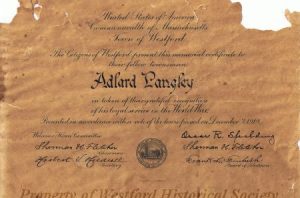
The Westford Museum’s Artifact of the week is a memorial certificate that was conferred upon the family of Adelard Langley, a soldier who served during World War I and ultimately
Featured Artifact of the Week
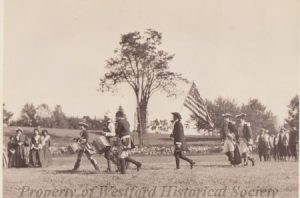
Photograph This black-and-white photo is from the Westford 200th anniversary pageant held in 1929. Among a set of four photos, this one features Minutemen reenactors, including drummers, a flag bearer,
Featured Artifact of the Week
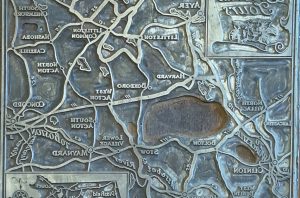
Printing Plate Original ”Reversed” 10” x 10 1/4” monotype printing plate (metal nailed to wood) of the 1937 Apple Blossom Festival that then involved multiple towns in the Nashoba Valley.
Featured Artifact of the Week
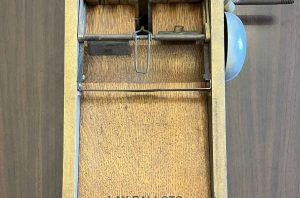
Ballot Counter The Ballot Counter from the Westford Town Hall is used during town elections. It is made of wood and features a metal frame, along with a bell that

Featured Artifact of the Week
Plate Commemorative plate from 1975, 11” in diameter. It highlights Westford’s Minutemen, who marched on the alarm of April 19, 1775. The Wilton-Columbia, PA, plate is made of Armetale, a
Featured Artifact of the Week
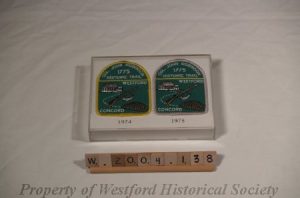
Patch Embroidered Boy Scout patches for the Col. John Robinson 1775 historic trail. Given out in 1975 for completion of walk from Westford to Concord. In 1974, the town’s Bicentennial

Featured Artifact of the Week
Bayonet A British Brown Bess Bayonet from around the 1760s. It is the same or similar to the ones used by riflemen on both sides of the American Revolution. “Brown

Featured Artifact of the Week
Powder Flask This tarnished brass powder horn is from the early nineteenth century. Powder horns used during the Revolution were normally made from genuine horns, such as those from a

Featured Artifact of the Week
Photograph This is a copy of a photograph taken around 1950 showing the Abbot Mills skating rink located off Coolidge Street. The house in the background served as the Abbot